Outcome Tracking in Behavioral Health: Why Tech Must Evolve
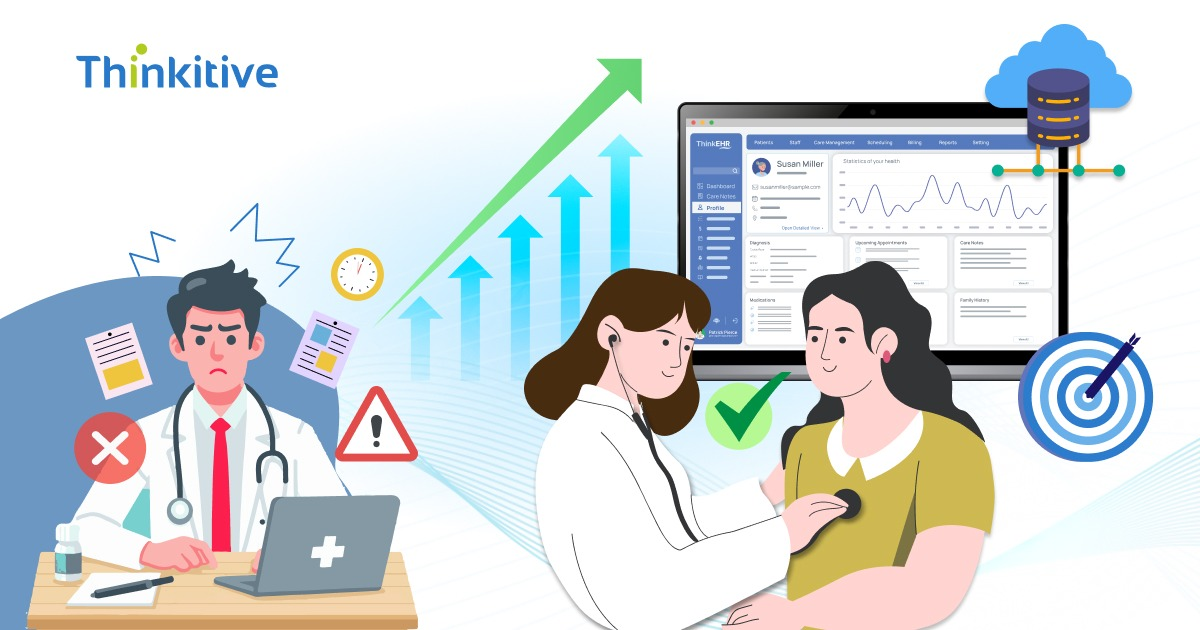
In healthcare, knowing if the treatment is working or not is only possible through tracking the treatment outcomes. However, in behavioral health, this becomes more crucial as there are no physical and visible signs of improvement in most cases.
But if you are using an outdated technology or a generic EHR that is not equipped with tools to track progress, doing this becomes difficult. Moreover, not knowing the outcomes, clinicians can’t change or adapt the treatment for the patients.
The result? Uncertainty and confusion, leading to wrong treatment or delayed interventions. Oftentimes, clinicians are forced to manually write the patient progress reports in templates that don’t support behavioral health workflows. Later on, this makes it challenging to find the right notes and see if the patient’s condition improved or declined.
And without effective tracking, clinicians are not able to see the complete picture. However, this situation can be changed with custom behavioral health software solutions with built-in templates and tools. With automated real-time outcome dashboards and data-driven insights, clinicians can easily track patient progress and develop targeted and personalized care plans.
This blog will explore the reasons why outcome tracking matters and how a custom mental health EHR makes it easy to track patient outcomes.
Let’s get started without further ado!
Why Outcome Tracking Matters
Outcome tracking is simply not just a step in the clinical journey but a way to measure the effectiveness of treatment. It is also what makes treatment reliable and accountable. Without it, clinicians can’t have absolute proof that the treatment is going in the right direction. Let’s take a look at why it matters:
Demonstrates Treatment Effectiveness: Like any other specialty, the progress in behavioral health treatment is not physically visible. That’s why clinicians need to track the symptom changes and emotional as well as behavioral changes in patients. So, tracking the outcomes becomes the crucial step that shows whether the treatment worked as it should or if there were some adverse effects.
Supports Evidence-Based Care Decisions: Having accurate data makes all the difference in trial-and-error and targeted care. So, outcome tracking becomes essential for gathering the needed data to provide evidence-based care that works for patients and ensures the condition is improving instead of declining.
Essential for Regulatory Compliance & Reporting: Accountability is a must in modern healthcare, and especially in mental healthcare. This accountability is provided by tracking the progress of the care plan. Without accurate tracking, clinics can face penalties and fines due to non-compliance, along with lost reimbursements and audit challenges.
In short, strong outcome tracking not only helps clinicians provide accurate and evidence-based care but also helps clinics avoid hefty fines and penalties.
Limitations of Generic EHR
While generic EHRs work for most practices, they do not have tools that can effectively track outcomes for behavioral health. This means that the clinics using generic EHR have no means to know whether the treatment is working or not. Here are the limitations of the generic EHR:
Minimal Dashboards & Static Reports: A behavioral health practice needs a dashboard that gives dynamic reports on patient progress or decline. However, generic EHRs come with only minimal dashboards and static reports, lacking the ability to show real-time progress, leaving clinicians to gather data from other sources.
Lack of Longitudinal Tracking Across Sessions: Behavioral treatment is quite lengthy and can go on for months and sometimes years. However, the generic EHR doesn’t support longitudinal data tracking, so clinicians can’t see the complete progress in patient health over time. Generic EHRs consider each visit a new encounter rather than a continuation of the previous one, making providing better care difficult.
Manual Data Aggregation Wastes Time & Risks Errors: Generic EHRs do not compile all the notes, assessments, and reports for patients, forcing clinicians to gather all this data manually. This wastes their time and increases the risks of human error, resulting in incomplete and inaccurate outcome data, impacting the care quality and compliance.
The Cost of Ineffective Tracking
Inefficient outcome tracking not just impacts care quality, but it also affects results, relationships, and revenue. Moreover, its impacts ripple across the whole clinic, patient care, provider efficiency, and organizational compliance.
Missed Opportunities to Adjust Treatment Plans: Without having accurate data on the patient’s condition, the clinic loses opportunities to adjust the care plan as per the impact of treatment. This leads to delayed interventions and possible risk to patient safety.
Poor Patient Engagement & Retention: Patients need to see proof of improvement when they follow the treatment plan to keep going with the care plan. However, when they don’t see any concrete data on this, it means losing trust and engagement over time, while increasing the chances of losing the patient.
Compliance & Audit Risks: Insurance companies and other regulatory bodies require evidence of the treatment working. Incomplete or inconsistent documentation can trigger compliance issues, payment denials, or audit challenges. This creates legal and financial risk for clinics and damages credibility with patients and partners.
In short, not properly tracking the outcome makes delivering accountable and precise care nearly impossible, damaging both finances and reputation.
How Modern Tech Can Solve the Problem
Generic EHR creates multiple gaps in outcome tracking. However, these gaps can be closed easily with a custom mental health EHR software equipped with modern tech. These tools can make the outcome tracking process much efficient, smoother, and actionable. Here’s how they do it:
Automated & Real-Time Outcome Dashboards: The custom EHR uses dynamic reports that are automatically updated with real-time data rather than static reports. Moreover, with dashboards, clinicians can easily track symptoms, trends, progress notes, and key metrics at a glance. This enables immediate and timely adjustments to the care plan, increasing treatment efficiency.
Integration with Therapy Notes, Assessments & Metrics: Custom EHRs centralize all the available data on patients. Clinicians can find everything in one place, whether it’s a therapy note, assessment, or behavioral metrics. This makes tracking patient treatment over the months or years possible without any manual aggregation.
Data-Driven Insights to Improve Care & Satisfaction: With robust analytics, custom mental health EHR systems analyze all the data to find hidden patterns and trends. This gives providers unique insights and helps in improving care. Moreover, patients are also able to see the improvements, encouraging them to keep following the plan and maintaining engagement throughout the care journey.
In short, modern EHRs enable clinicians to track patient progress efficiently, identify trends early, and make timely treatment adjustments. They also reduce administrative burden, freeing time for care, while improving overall treatment quality and boosting patient satisfaction.
Conclusion
In behavioral health, outcome tracking is essential to confirm that the treatment is effective for the patients. It plays a crucial role in making adjustments to the care plan or changing it if it’s affecting the patient’s condition adversely.
However, outdated tech or generic EHRs are not helpful for proper outcome tracking in behavioral health as they are not designed for it. So, using a custom behavioral health EHR with built-in tools for tracking outcomes in mental health is essential for transforming patient care and clinical workflow.
If you are struggling with outcome tracking, then click here to book a demo to see how modern EHRs track outcomes effortlessly.
Frequently Asked Questions
Why is outcome tracking important in behavioral health?
Outcome tracking shows whether therapy or treatment is working, even when improvements aren’t physically visible. It helps clinicians make informed, timely adjustments, ensures care is evidence-based, and provides measurable proof of progress, which boosts patient trust and engagement.
Why don’t generic EHRs support proper outcome tracking?
Generic EHRs are built for general medical workflows, not behavioral health. They often lack dynamic dashboards, longitudinal tracking, and integration with therapy notes or assessments. This forces clinicians to manually compile data, increasing errors, wasting time, and hiding trends critical for effective care.
How can modern EHRs improve outcome tracking?
Modern behavioral health EHRs offer real-time dashboards, integrate session notes and assessments, and provide data-driven insights. They streamline documentation, highlight patient progress trends, and enable personalized interventions, helping clinicians deliver more effective care while reducing administrative burden and improving patient satisfaction.












Post Comment